



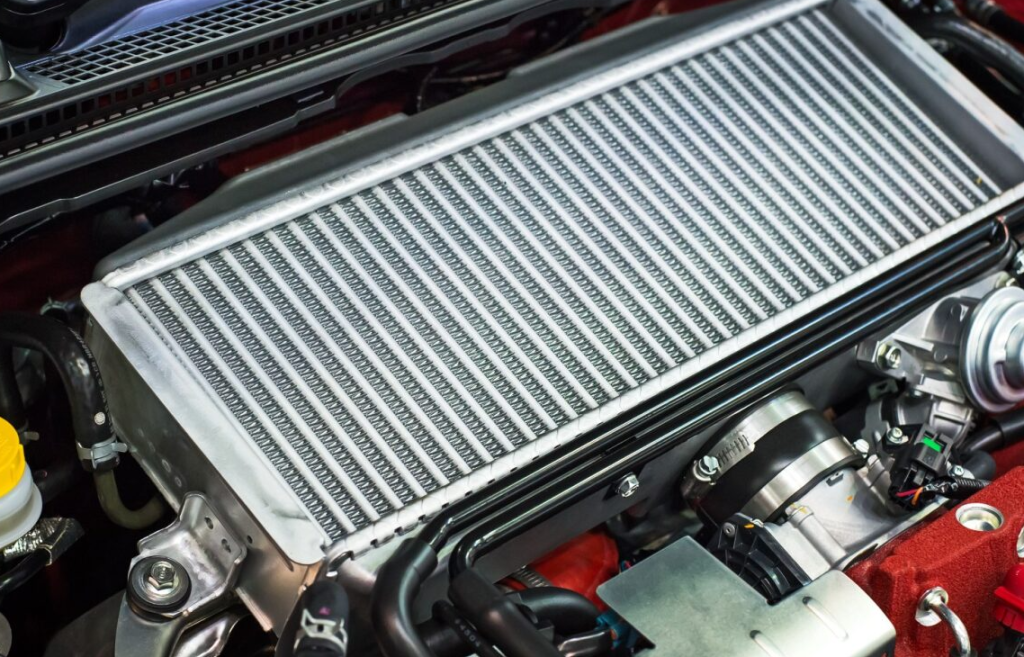
The radiator is a crucial component in your GMC’s cooling system. Its job is to remove heat from the coolant, so it can cool down the engine. If your radiator isn’t working properly, you should get it checked immediately by your GMC dealer. Check out these signs indicating your car needs a radiator repair.
Overheating Engine
Once your radiator stops doing its cooling job efficiently, your engine temperature will start climbing rapidly. If your temperature gauge is in the red zone and the check engine light has come on, your radiator isn’t working. Driving with this problem can cause serious engine damage due to the excessive heat. So visit your dealer to have the radiator fixed.
Coolant Leaks Under the Car
If you suspect radiator issues, check the ground underneath the front of your GMC for any colored fluid leaks. These leaks are caused by a cracked radiator or damaged radiator lines. If the coolant levels drop significantly due to the leaks, there won’t be enough fluid to absorb heat from the engine. As a result, your vehicle will start to overheat.
Blocked Exterior Radiator Fins
Your radiator has exterior fins that provide the surface area needed by the radiator to dissipate heat from the coolant. As the car moves, air flows over the fins and absorbs heat from the hot coolant. If the fins are clogged with dirt or leaves, there will be restricted airflow and inadequate cooling. You should get the fins cleaned and checked for damage to ensure proper airflow in the system.
Sludge Inside the Radiator
Over years of use, the radiator can corrode, causing rust deposits to accumulate inside. These deposits mix with the coolant and slowly build up as thick sludge inside the radiator. Sludge can clog the interior channels, causing restricted coolant flow. If your radiator is old and has started to rust, you should replace it to keep your coolant clean and effective at cooling the engine.
Bent or Damaged Fins
Radiator fins are soft and delicate and prone to damage by rocks, sticks, and other road debris. If they are bent, smashed, or damaged, they won’t allow proper airflow to the coolant. Your dealer’s technicians have the right tools to straighten out bent fins and restore airflow. If the fins are severely damaged, you may need to replace the radiator.
Damaged Radiator Hose
The radiator hose allows coolant to cycle from the engine and radiator for cooling and back to the engine to absorb heat. If the hose has visible swelling or spongy spots, it can leak coolant and reduce the efficiency of the cooling system. Replace it before it ruptures and prevents coolant circulation to the engine.
You should address these radiator issues early to protect your engine from severe and costly damage. Contact Oxendale GMC to schedule radiator diagnosis and repair with our GMC-certified technicians.
Connect with us


- April 2026
- March 2026
- December 2025
- October 2025
- September 2025
- August 2025
- July 2025
- June 2025
- May 2025
- April 2025
- March 2025
- February 2025
- January 2025
- December 2024
- November 2024
- October 2024
- September 2024
- August 2024
- July 2024
- June 2024
- May 2024
- April 2024
- March 2024
- February 2024
- January 2024
- December 2023
- November 2023
- October 2023
- September 2023
- August 2023
- July 2023
- June 2023
- May 2023